
 Rackmount PC
 Embedded Computing
 Industrial Portable Computers
 Rugged Tablets
 Rugged Laptop
 Industrial Panel PC
 Rugged Handheld
 Advantech Industrial PC
19-Inch Rack Size and Dimensions Explained: The Complete Guide to Server and Rackmount Pc Standards
Table of Contents
- I. Introduction
- II. Historical Background and Standards
- III. Explanation of the core dimensions
- IV. Rack Types and Configurations
- V. Mounting rails and hardware
- VI. Equipment & Use
- VII. Comparison with other standards
- VIII Summary and Best Practices
I. Introduction
A 19-inch rack is a globally standardized frame used for mounting servers, network equipment, industrial controls, and audiovisual equipment. Originally defined by the EIA-310 standard , the rack specifies a front panel width of 19 inches (482.6 mm) , allowing different hardware from various manufacturers to fit in the same enclosure. This compatibility has made rackmount systems the backbone of data centers, telecommunications rooms, broadcast studios, and industrial automation facilities .
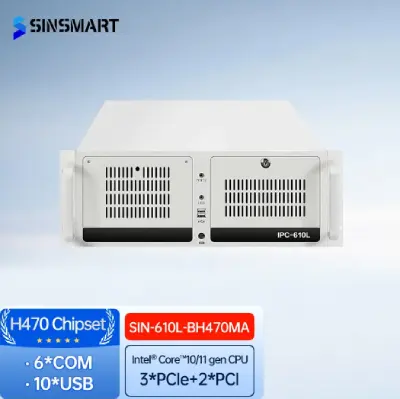
Rack dimensions are based on the concept of the rack unit (U) , where 1U equals 1.75 inches (44.45 mm) in height. Devices such as a 1U server , 2U storage array, or 4U industrial PC can be stacked vertically in a single rack, maximizing density while maintaining a predictable size. Depth is more variable, ranging from 600 mm to 1200 mm (24–48 inches) , and is often selected based on cooling requirements, cable management, and the type of rack-mountable equipment being used.
Key advantages of the 19-inch rack format include:
- Interoperability across vendors
- Efficient space utilization through vertical stacking
- Scalability for growing IT or industrial environments
- Support for accessories such as cable management arms, power distribution units and airflow containment.
In modern IT and industrial environments, the size and dimensions of a 19-inch rack serve as the basis for building a reliable, expandable and standards-compliant infrastructure.
II. Historical Background and Standards
The 19-inch rack has been the foundation for rackmount PCs, servers, and telecommunications equipment for over a century. Its origins trace back to AT&T in 1922 , when telephone repeaters provided a standardized mounting system to simplify installation and maintenance. What began as a telecommunications solution soon became the global standard for data centers, industrial automation, and audiovisual equipment .
To ensure long-term compatibility, several international rack standards have been introduced:
- EIA-310-D – Defines the official 19-inch rack width , height unit (U) of 1.75 inches (44.45 mm) and hole spacing.
- IEC 60297 – An international standard for rack dimensions , mounting hole patterns and interregional compatibility.
- DIN 41494 – A European standard that is based on the IEC specifications and is frequently used in industrial control cabinets .
- CEA-310-E – successor to the EIA guidelines, ensuring uniform rack dimensions for IT and electronic equipment .
A key concept is the rack unit (U) , which standardizes device height in multiples of 1.75 inches. This allows a 1U rackmount server , a 2U storage device , or a 4U industrial PC chassis to fit seamlessly into the same enclosure.
Quick overview table
| standard | focus | Important dimensions |
|---|---|---|
| EIA-310-D | North American Telecommunications/IT | 19″ width, 1.75″ rack unit height |
| IEC 60297 | International IT/Industry | 19″ wide, modular units |
| DIN 41494 | European industry | 19″ width, IEC orientation |
These rack standards remain crucial to ensuring that rackmount PCs, servers, switches and industrial systems remain interoperable, scalable and reliable across industries.
III. Explanation of the core dimensions
Understanding the core dimensions of a 19-inch rack is important when using rackmount PCs, servers, and network devices. The three critical measurements are width, height, and depth , each defined by industry standards, but with variations for specific applications.
- Rack width – The standardized front panel width is 19 inches (482.6 mm) as defined by EIA-310 . The mounting rails are slightly narrower, with a 17.75-inch internal spacing , to ensure that devices with handles or bezels will still fit. Some industries also use 23-inch racks , but the 19-inch rack size remains dominant in IT and industrial control applications.
- Rack height – measured in rack units (U) , where 1U equals 1.75 inches (44.45 mm) . Equipment such as 1U rackmount servers , 2U storage arrays , and 4U industrial PCs are designed for this measurement. Common chassis sizes are 42U or 48U , with a vertical capacity of over 6 feet.
- Rack depth – Unlike width and height, depth is not fully standardized. Typical ranges are 600 mm (24″), 800 mm (31.5″), 1000 mm (39.4″), and 1200 mm (47.2″) . The depth selection affects cable management, airflow, and compatibility with larger servers .
Overview of rack dimensions
| dimension | Standard value | Notes |
|---|---|---|
| Width | 19″ (482.6 mm) | Internal rail spacing ~17.75″ |
| Height | 1U = 1.75″ | 42U and 48U racks are most common |
| depth | 600–1200 mm | Depending on server size, cooling, and cabling |
By aligning with these rack dimensions, organizations ensure interoperability, efficient space utilization, and scalable infrastructure for both IT and industrial rackmount PC deployments .

IV. Rack Types and Configurations
The 19-inch rack is available in several types and configurations , each for specific rackmount PCs, servers, telecommunications and industrial applications. Choosing the right style ensures optimal space utilization, airflow and equipment support .
- Two-post (relay) racks – slim, lightweight, and often floor-mounted, these are ideal for network switches, patch panels, and lightweight rackmount equipment . Commonly found in telecommunications cabinets where depth and weight are limited.
- Four-post racks offer front and rear mounting rails , providing better weight distribution for servers, UPS systems, and heavy industrial PCs. They can be open for accessibility or closed for security and airflow control.
- Rack enclosures (cabinets) – Fully enclosed with lockable doors, side panels, and cable management systems . Popular in data centers and industrial automation rooms where dust protection, cooling management, and security are critical.
- Wall-mounted racks – compact enclosures for branch offices, AV installations, or small industrial plants . They typically range in capacity from 6U to 18U .
- Special racks – Includes soundproof racks for office environments, seismic racks compliant with Telcordia GR-63-CORE , and mobile ATA flight cases for broadcast and live event equipment.
Overview of the rack configuration
| Rack type | Typical use case | Strengthen |
|---|---|---|
| 2-Post | Telecommunications, patch panels | Cost-effective, compact |
| 4-Post | Servers, rackmount PCs | Stability, scalability |
| Housing | Data centers, industrial control | Safety, airflow, cable management |
| wall mount | Small offices, AV, Edge IT | Space-saving |
| specialty | Radio, seismic, mobile | specially built |
By choosing the appropriate rack configuration, organizations can strike a balance between density, cooling, cable management and security to create efficient and reliable rackmount infrastructures .
V. Mounting rails and hardware
A critical part of any 19-inch rack system is its mounting rails and hardware , which define how securely and efficiently rackmount PCs, servers, and network devices are installed. While the rack size and dimensions create the framework, it is the rails, hole patterns, and fasteners that ensure long-term stability, easy access, and compatibility with various devices.
Types of mounting holes
Industry standards define three common hole types used in rack rails :
- Threaded holes – Pre-drilled threaded holes (usually 10-32, 12-24, or M6) that directly accept screws. Reliable, but less flexible, as overtightening can damage the threads.
- Through holes (round) – holes without threads that require screws and nuts. Less common in modern IT racks, but still found in industrial enclosures .
- Square holes – the most common design today. These accept cage nuts , allowing for various screw types and quick replacement. Standard in most server racks, data centers, and enterprise cabinets .
Mounting rails & sliding systems
Rails are vertical posts in the rack that hold equipment. Many devices, especially rackmount servers and industrial PCs , use sliding rail kits that attach to both the front and rear rails. These systems allow:
- Easy access for maintenance or replacement
- Hot-swap support for enterprise servers
- Cable management arms (CMA) for tidy cabling behind the server
High-quality rails are typically made of 2 mm or thicker steel , which increases the load-bearing capacity for heavy 2U or 4U rackmount PCs .
Structural support and seismic considerations
For stability, four-post racks distribute the weight of the equipment evenly, thus reducing stress on the mounting components. In environments subject to vibration or seismic activity, racks must meet Telcordia GR-63-CORE and GR-3108-CORE compliance standards. These require reinforced rails, bracing, and hardware that can withstand high loads.
Accessories and hardware expansions
A complete rackmount hardware ecosystem often includes:
- Cage nuts and clip nuts – for adapting different screw sizes
- Rail adapter – for mounting non-standard devices
- Cable trays and ducts – for structured cabling management
- Power distribution units (PDUs) – mounted vertically or in zero-U space for efficient power supply
- Fan slots and air deflectors – maintaining effective cooling in densely packed servers
Reference table for assembly parts
| component | function | Common use case |
|---|---|---|
| Threaded holes | Direct screw mounting | Legacy racks, small enclosures |
| Square holes | Flexibility in cage nut assembly | Company servers, data centers |
| Slide rails | Enables hot-swapping and easy maintenance | Rackmount PCs, storage systems |
| Cable management | Organize cables, avoid cable clutter | Network racks, high-density setups |
| Power distribution | Power distribution in the rack | IT, telecommunications, industrial automation |
By selecting the right mounting rail system and hardware accessories, organizations ensure that their rackmount infrastructure is not only secure but also optimized for ease of maintenance, airflow, and long-term reliability .
VI. Equipment & Use
A 19-inch rack is not just a frame; it is the foundation for housing a wide variety of rack PCs used in data centers, telecommunications, broadcasting, and industrial automation . Its standardized rack size and dimensions allow different devices from multiple vendors to coexist in the same enclosure, ensuring interoperability and scalability .
Common rackmount devices
- Rackmount PCs and industrial PCs – often 1U to 4U high, designed for industrial control, factory automation and edge computing .
- Servers – Blade servers, 1U application servers and 2U–4U storage servers dominate data center racks .
- Network devices – routers, switches, firewalls and patch panels that form the backbone of enterprise IT and telecommunications networks .
- Power supply and cooling units – rackmount UPS systems, PDUs (Power Distribution Units) and fan trays for airflow control.
- Audiovisual equipment – mixing consoles, amplifiers and broadcast encoders, widely used in AV and media production racks .
Use in various environments
- Data centers –Racks enable high-density server deployments , efficient airflow cooling (from front to back) and structured cable management .
- Telecommunications equipment – Two-post relay racks hold lightweight telecommunications switches and patch devices.
- Industrial environments – Enclosed racks protect industrial rackmount PCs from dust, vibrations and temperature fluctuations.
- Broadcasting and AV – special racks offer space for sound insulation, mobility (flight cases) and earthquake safety .
Rack Equipment Deployment Table
| Device type | Height units (U) | Typical use case |
|---|---|---|
| 1U Server | 1U | Web hosting, virtualization |
| 2U storage array | 2U | High-capacity data storage |
| 4U industrial PC | 4U | Automation, control systems |
| Rackmount switch | 1U–2U | Network and telecommunications operations |
| UPS system | 2U–6U | Emergency power supply in data centers |
By utilizing the 19-inch rack format, organizations achieve space efficiency, structured growth, and improved maintainability , making it the universal choice for modern rackmount infrastructure . (Learn more about 1U rackmount PCs , 2U rackmount PCs , etc.)
VII. Comparison with other standards
While the 19-inch rack is the global standard for mounting servers, industrial rackmount computers , and network equipment, there are alternative rack standards that continue to be used in certain industries. Understanding these differences is crucial when planning and expanding infrastructure.
Alternative rack standards
- 10-inch racks – Compact racks, often used for small network devices, AV equipment or home labs. They save space, but are not scalable for use in businesses or industry.
- 23-inch racks – A legacy telecommunications standard , common in older switching centers. These racks offer more panel width (584 mm) but are largely being replaced by 19-inch racks in modern data centers.
- Open Rack Standard (OCP) – Developed by the Open Compute Project , these racks maintain the same 600 mm chassis width but support wider IT equipment modules (21 inches / 533 mm) . Favored in hyperscale data centers for higher density and improved airflow.
- Eurocard / DIN 41494 – Widely used in industrial control and embedded systems , aligned with IEC 60297 specifications. Often used for PCB-based devices in automation and test systems.
Comparison table
| Rack standard | Width | General application | Status / Acceptance |
|---|---|---|---|
| 19-inch rack | 482.6 mm | Servers, rackmount PCs, IT | Global standard, dominant |
| 10-inch rack | 254 mm | AV, SOHO, Edge-IT | Niche, limited use |
| 23-inch rack | 584 mm | Legacy telecommunications | Declining acceptance |
| OCP Open Rack | 533 mm (21″) | Hyperscale data centers | Growth among cloud providers |
| Map of Europe/DIN | 3U/6U sizes | Industrial automation | Strong in Europe/Industry |
Comparing the 19-inch rack with these alternatives makes it clear why it remains the predominant choice: broad compatibility, adherence to industry standards, and scalability . Specialized environments—such as telecommunications or hyperscale computing —may still prefer alternative formats for specific operational requirements.
VIII. Summary and Best Practices
The 19-inch rack remains the universal framework for residential rackmount PCs , servers, network devices, and industrial control systems . Its standardized rack size and dimensions — 19 inches wide, 1.75-inch rack unit (U) high, and 600–1200 mm deep —provide the interoperability required for modern IT, telecommunications, and industrial applications. By adhering to established EIA-310 and IEC 60297 standards, companies ensure that devices from different vendors fit seamlessly into the same enclosure.
Key findings
- Width : Fixed at 19 inches (482.6 mm) , ensuring global compatibility.
- Height : Measured in rack units (U) , with 42U and 48U racks being most common in data centers.
- Depth : Flexible between 600 mm and 1200 mm , selected based on server length, cable spacing and airflow.
- Rack types : 2-post relay racks for lightweight telecommunications equipment, open 4-post frames for heavy servers, and enclosures for secure, dust-controlled environments.
- Mounting accessories : Square holes with cage nuts are now the industry standard, paired with slide rails, CMAs (cable management arms) and PDUs for efficient operation.
Best practices for rackmount deployments
- Plan for growth – Choose a rack with additional rack units to accommodate future servers, UPS systems, or industrial PCs.
- Prioritize cooling – Ensure airflow from front to back, leave space for fan ducts, and consider blanking plates to avoid hotspots.
- Organize cabling - Use vertical cable managers, zero-U PDUs, and CMAs to keep cabling structured and functional.
- Ensure stability – In seismic or industrial environments, use racks that are certified to Telcordia GR-63-CORE standards.
- Measure twice, install once – Always confirm rack depth, mounting hole pattern and weight capacity before deployment.
By applying these best practices for rack mounting, IT managers and engineers can build scalable, secure, and reliable rack infrastructures that maximize uptime, improve airflow efficiency, and simplify long-term maintenance.


LET'S TALK ABOUT YOUR PROJECTS
- sinsmarttech@gmail.com
-
3F, Block A, Future Research & Innovation Park, Yuhang District, Hangzhou, Zhejiang, China
Our experts will solve them in no time.