
 Rackmount PC
 Embedded Computing
 Industrial Portable Computers
 Rugged Tablets
 Rugged Laptop
 Industrial Panel PC
 Rugged Handheld
 Advantech Industrial PC
7 Reasons to Use Rugged Solutions in Manufacturing Workshops
Table of Contents
- I. Introduction
- II. Why Are Rugged Solutions Important in Manufacturing Workshops?
- III. Common Challenges in Modern Manufacturing Workshops
- IV. 7 Reasons to Use Rugged Solutions in Manufacturing Workshops
- V. Rugged Solutions vs. Standard Commercial Devices
- VI. Real Manufacturing Applications of Rugged Solutions
- VII.How to Choose the Right Rugged Solution for Your Manufacturing Workshop
- VIII. How SINSMART Rugged Solutions Support Your Manufacturing Goals
- IX. FAQ
Introduction
Introduction
In modern manufacturing environments, operational reliability has become a decisive factor for productivity and competitiveness. Factories today operate under increasingly harsh conditions—including dust, vibration, temperature fluctuations, and 24/7 continuous workloads—where traditional commercial computing devices often fail and lead to costly interruptions. As digital transformation and Industry 4.0 initiatives accelerate, manufacturers are turning to rugged computing solutions such as industrial PCs and rugged tablets to ensure stable performance at the production edge. This need is strongly supported by industry data: a recent benchmark report shows that unplanned downtime can cost manufacturers on average around $260,000 per hour of lost production, highlighting how even short disruptions can result in significant financial impact across industrial operations.

Why Are Rugged Solutions Important in Manufacturing Workshops?
Manufacturing workshops expose computing devices to a relentless combination of dust, vibration, temperature fluctuations, moisture, and the need for 24/7 operation. Standard commercial computers often fail in these conditions, leading to costly downtime. Rugged solutions—such as industrial PCs, rugged tablets, and rugged laptops—are purpose-built to withstand these harsh environments. By investing in rugged computing, manufacturers can significantly reduce equipment failures, lower maintenance costs, improve worker productivity, and lay a strong foundation for Industry 4.0 and smart factory initiatives.
Manufacturers choose rugged solutions because they:
• Withstand harsh environments
• Reduce equipment failures
• Minimize downtime
• Improve productivity
• Lower maintenance costs
• Support digital transformation
•Deliver better long-term ROI
Common Challenges in Modern Manufacturing Workshops
Before exploring the benefits, it's crucial to understand the specific challenges that make rugged solutions a necessity in manufacturing environments.
• Dust and Debris: Fine particles can clog fans and settle on motherboards, causing overheating and short circuits.
• Vibration and Shock: Constant operation of heavy machinery, presses, and conveyors creates vibrations that can damage hard drives and loosen internal components of standard computers.
• Extreme Temperatures: Foundries and high-heat processes create scorching environments, while cold storage facilities for food and pharmaceuticals require electronics to function in sub-zero temperatures.
• Moisture and Chemical Exposure: Food processing plants require frequent washdowns, and chemical manufacturing involves exposure to corrosive substances that can destroy unprotected electronics.
• 24/7 Continuous Operations: Devices are often required to run around the clock, placing immense strain on components designed for intermittent use.
7 Reasons to Use Rugged Solutions in Manufacturing Workshops
7 Reasons to Use Rugged Solutions in Manufacturing Workshops
Reason 1: Rugged Solutions Can Withstand Harsh Industrial Environments
Manufacturing workshops are complex environments that place extremely high demands on the dustproof, waterproof, and shock-resistant capabilities of computing devices. Conventional commercial equipment is highly vulnerable to damage under such conditions, whereas rugged solutions are specifically designed to thrive in these environments.
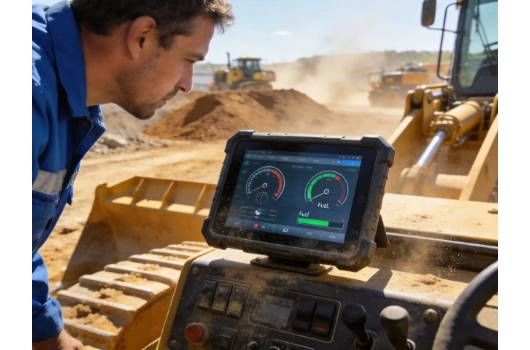
• High-Level Protection: SINSMART industrial computers and rugged tablets typically feature IP65 or higher protection ratings, effectively preventing dust and water ingress. For example, rugged tablets achieve IP67/IP68 protection through a combination of sealed structures, waterproof materials, and precision engineering, ensuring stable operation even in oily or high-humidity environments.
• Vibration and Shock Resistance: Designed in accordance with the MIL-STD-810H military standard, these devices can withstand continuous vibrations from production equipment as well as accidental drops during material handling operations.
• Fanless Design: Many embedded industrial PCs adopt a fanless architecture, eliminating the risk of dust accumulation caused by cooling fans, which can lead to overheating or short circuits. Fanless systems also operate silently, making them ideal for dusty environments such as logistics warehouses and unmanned mining sites.
Reason 2: Rugged Solutions Reduce Equipment Downtime
For procurement managers, every minute of production line downtime translates into lost revenue. Frequent equipment failures that disrupt operations are among the most significant challenges manufacturers face. Rugged solutions are engineered for high reliability, significantly reducing failure rates and maximizing uptime for mission-critical applications.
By utilizing industrial-grade components—such as wide-temperature memory modules and solid-state drives (SSDs)—and undergoing rigorous testing procedures, rugged devices can support continuous 24/7 operation. This ensures stable performance and minimizes costly production interruptions.

Reason 3: Rugged Solutions Help Lower Maintenance Costs
Although rugged devices often require a higher initial investment than commercial-grade equipment, they provide superior value when evaluated from a Total Cost of Ownership (TCO) perspective.
• Fewer Repairs and Replacements: Rugged devices are typically designed for a service life of 5–10 years, compared to just 2–3 years for standard commercial equipment. Their ability to withstand harsh operating conditions results in lower failure rates, reducing maintenance and replacement expenses.
• Longer Product Lifecycle: Industrial motherboards often have product lifecycles of 7–10 years, ensuring long-term availability of spare parts and minimizing the need for frequent hardware platform upgrades. This also helps avoid repeated investments in software migration, validation, and certification processes.
Reason 4: Rugged Solutions Improve Productivity
In modern manufacturing, real-time and accurate data is critical for efficient operations. Rugged solutions—especially rugged tablets—serve as powerful tools for enabling mobile and digitalized production workflows.
• Real-Time Data Collection: Workers can use rugged tablets directly on the production line for barcode scanning, quality inspections, and data entry. Information is instantly uploaded to Manufacturing Execution Systems (MES), enabling seamless real-time data flow.
• Mobile Inspection and Warehouse Operations: In logistics and warehousing environments, rugged tablets and vehicle-mounted computers help employees efficiently manage receiving, inventory counting, and shipping processes, significantly improving operational productivity.
Reason 5: Rugged Solutions Enhance Worker Safety
In hazardous environments where flammable gases, combustible dust, or explosive materials may be present, the use of standard electronic devices can pose serious safety risks. Rugged solutions include intrinsically safe and explosion-proof devices that are specifically designed for safe operation in such environments.
In addition, rugged handheld terminals enable frontline workers to access and share safety information, operating procedures, and emergency instructions in real time, helping reduce human error and improve workplace safety.

Reason 6: Rugged Solutions Support Industry 4.0 and Smart Manufacturing
As the computing backbone of industrial operations, rugged edge computing devices act as a bridge between the physical and digital worlds of smart factories.
These devices serve as gateways for the Industrial Internet of Things (IIoT), collecting and aggregating data from production equipment, sensors, and control systems. By performing localized data processing and analysis at the edge, rugged computing platforms enable more intelligent production scheduling, predictive maintenance, and data-driven decision-making, forming a critical foundation for Industry 4.0 initiatives.
Reason 7: Rugged Solutions Deliver a Higher Return on Investment (ROI)
Overall, implementing rugged solutions is a strategic long-term investment for manufacturers.
• Reduced Downtime Losses: Increased reliability directly translates into greater equipment uptime and higher production output.
• Lower Maintenance Costs: Reduced repair frequency and fewer equipment replacements help save both labor and spare-parts expenses.
• Improved Productivity: Digitalization and automation tools streamline workflows and increase output per labor hour.
• Extended Equipment Lifespan: Longer service life spreads equipment costs over more years, reducing annual ownership expenses.

Rugged Solutions vs. Standard Commercial Devices
Rugged Solutions vs. Standard Commercial Devices
Rugged Solutions vs. Standard Commercial Devices
Rugged Solutions vs. Standard Commercial Devices
Rugged Solutions vs. Standard Commercial Devices
| Comparison Item | Standard Commercial Devices | Rugged Solutions(e.g., SINSMART) |
| Dust Protectiom | Low, prone to dust ingressleading to failures | High, IP65 and above, effectivelyblocks dust |
| Vibration Resistance | Low, prone to hard drive damageor loose connections due tovibration | High, compliant with MIL-STD-810Hmilitary vibration standards |
| Operating Temperature | Limited, usually 0-40°C | Wide temperature operation,embedded products can reach-25-70°C |
| Service Life | 2-3 years | 5-10 years |
| Failure Rate | Relatively high | Relatively low |
| Maintenance Cost | High | Low |
Real Manufacturing Applications of Rugged Solutions
Real Manufacturing Applications of Rugged Solutions
Real Manufacturing Applications of Rugged Solutions
Real Manufacturing Applications of Rugged Solutions
- Automotive Manufacturing: Large industrial tablets on assembly lines provide workers with step-by-step instructions and torque specs, ensuring precision and reducing defects.
- Electronics Assembly: Compact embedded industrial PCs in SMT (Surface Mount Technology) machines control high-speed pick-and-place operations with precision and reliability.
- Metal Processing: Fanless, shock-resistant industrial computers handle data acquisition in high-vibration environments like stamping and forging areas.
- Food Processing: Stainless steel, IP65-rated industrial panel PCs can be safely washed down in hygienic zones, resisting moisture and cleaning chemicals.
- Warehouse and Logistics: Rugged handhelds and tablets are used for real-time inventory management, receiving, and shipping, enabling faster and more accurate logistics.

How to Choose the Right Rugged Solution for Your Manufacturing Workshop
How to Choose the Right Rugged Solution for Your Manufacturing Workshop
Choosing the right device requires a careful evaluation of your specific needs.
- Consider Environmental Conditions: Identify the primary threats: dust, vibration, temperature, liquids.
- Evaluate Processing Requirements: Does your application need a high-performance CPU for data analytics or a low-power chip for a simple HMI? Check CPU options like Intel or Rockchip ARM.
- Check Connectivity Options: How many USB, COM, LAN ports do you need? Do you need Wi-Fi 6, 5G, or GPS.
- Verify Protection Ratings: Confirm the IP and MIL-STD ratings match your shop floor conditions.
- Choose a Vendor with Customization Capabilities: Often, standard products don't fit perfectly. A vendor offering OEM/ODM services can provide custom interfaces, mounting options, and even BIOS tweaks to match your unique requirements.
How SINSMART Rugged Solutions Support Your Manufacturing Goals
How SINSMART Rugged Solutions Support Your Manufacturing Goals
How SINSMART Rugged Solutions Support Your Manufacturing Goals
SINSMART (Hangzhou Dongtian Technology) is an integrated manufacturer specializing in the research, development, production, and distribution of rugged and industrial computing solutions. We have a deep understanding of the challenges faced by manufacturers operating in harsh environments and provide one-stop services covering everything from design to delivery.
Our core product portfolio includes:
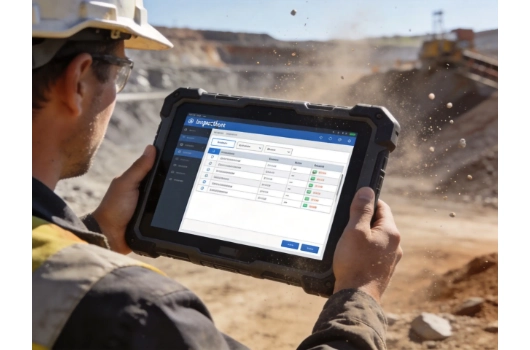
• Rugged Tablets: Such as the SIN-I1008E, designed for logistics and warehousing applications, featuring an IP65-rated rugged enclosure for reliable operation in demanding environments.
• Rugged Laptops: Such as the SIN-S1406L, delivering powerful computing performance for outdoor field operations and low-altitude drone applications.
• Fanless Embedded Industrial PCs: Such as the ARK-1123H, providing a compact, stable, and silent solution for edge computing deployments.
• Rackmount Industrial PCs: Such as the SIN-14502-BH31CMA, designed for data centers and power/control systems requiring high scalability and expansion capabilities.
• OEM/ODM Customization Services: We offer tailored solutions to meet your project-specific requirements, including customized dimensions, interfaces, performance configurations, and protection levels.
FAQ
FAQ
FAQ
Q1. What is a rugged computer?
A.A rugged computer is a device specifically engineered to operate reliably in harsh environments, featuring protection against dust, water, shock, vibration, and extreme temperatures.
Q2. Are rugged computers worth the investment?
A.Yes, despite a higher upfront cost, their longer lifespan and lower failure rate result in a lower Total Cost of Ownership (TCO) compared to commercial PCs in industrial settings.
Q3. How long do rugged industrial PCs last?
A.A well-designed rugged industrial PC can have a lifespan of 5 to 10 years or more, often outlasting multiple generations of commercial devices.
Q4. What IP rating is recommended for manufacturing workshops?
A.For most dusty workshops, IP65 is a good baseline. For environments with washdowns or high humidity, IP65 or higher is recommended.
Q5. Can rugged tablets be used on production lines?
A.Absolutely. Rugged tablets are ideal for mobile tasks on the production line, such as quality inspection, machine monitoring, and work order management.
Q6. What industries use rugged computing solutions?
A.They are used across many industries, from the ones we discussed (Automotive, Electronics, Food & Beverage) to oil & gas, military, construction, and logistics.
Q7. What is the difference between industrial PCs and commercial PCs?
A.The main difference is design philosophy. Industrial PCs are built for durability and long-term reliability in harsh environments, while commercial PCs prioritize cost and aesthetics for office use.
Q8. Can rugged computers support Industry 4.0 applications?
A.Yes, they are a key enabler. Their ability to function reliably at the edge makes them ideal for IIoT gateways, edge computing nodes, and smart factory integration.


LET'S TALK ABOUT YOUR PROJECTS
- sinsmarttech@gmail.com
-
3F, Block A, Future Research & Innovation Park, Yuhang District, Hangzhou, Zhejiang, China
Our experts will solve them in no time.