
 Rackmount PC
 Embedded Computing
 Industrial Portable Computers
 Rugged Tablets
 Rugged Laptop
 Industrial Panel PC
 Rugged Handheld
 Advantech Industrial PC
Components of a Machine Vision System
2024-08-13 16:29:49

A machine vision system's essential components include image acquisition hardware, lighting, optics, processing units, and vision software. These components work together to execute activities including defect detection, part identification, robot guiding, and quality assurance across a variety of sectors.

Why Machine Vision Matters
The significance of machine vision systems lies in their ability to reduce human error, increase production speed, and maintain consistent product quality. This is especially vital in sectors like:
-
Automotive manufacturing – for surface defect inspection and part alignment
-
Electronics assembly – for PCB inspection and solder verification
-
Pharmaceuticals – for label verification and vial fill-level checks
-
Food & beverage – for packaging inspection and contamination detection

Core Components of a Machine Vision System
A machine vision system is only as effective as its individual components. Each component contributes significantly to the transformation of raw visual data into actionable insights that drive automation, improve product quality, and assure industrial process consistency. While configurations may vary depending on application, most machine vision systems incorporate the following key components:
1. Image Acquisition Devices
At the heart of every machine vision system is an industrial camera. These cameras capture high-resolution images of the target object. Depending on the application, systems may use:
-
Area scan cameras – for two-dimensional imaging
-
Line scan cameras – for high-speed conveyor inspection
-
3D cameras – for depth analysis and volumetric inspection
The image sensor (typically CCD or CMOS) embedded in the camera determines image quality, speed, and light sensitivity.
2. Lighting Systems
Lighting directly affects the accuracy and reliability of image capture. Common types of machine vision lighting include:
-
Backlight – ideal for silhouette imaging
-
Ring light – uniform lighting for surface inspection
-
Coaxial light – effective for reflective surfaces
-
Dome light – eliminates shadows and highlights
Proper lighting ensures contrast, clarity, and uniformity, all of which are essential for downstream image analysis.
3. Optics and Lenses
Machine vision lenses focus light onto the image sensor. Lens selection is based on the field of view, working distance, and required resolution. Telecentric lenses are often used when precision and distortion-free imaging are needed. Additionally, optical filters can enhance contrast and block unwanted light wavelengths.
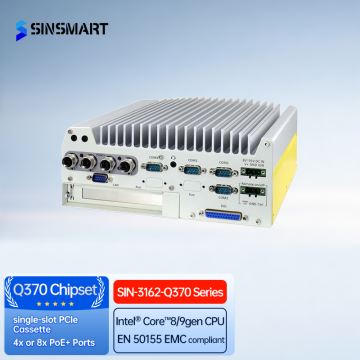
4. Processing Hardware
-
High-performance CPUs and GPUs to process large volumes of image data or run AI-based algorithms.
-
Rich I/O interfaces such as GigE, USB 3.0, and Camera Link to connect multiple cameras simultaneously.
-
Expandable slots for frame grabbers, GPU cards, or AI accelerators.
-
Wide temperature and voltage support, ensuring stable operation in industrial settings.
By serving as the brain of the system, industrial computers enable real-time decision-making and seamless integration with PLCs, robots, and factory networks. This makes them indispensable for any high-performance machine vision application.
5. Vision Software
Finally, the machine vision software performs tasks such as pattern recognition, OCR, barcode decoding, blob analysis, and defect detection. Software platforms may be proprietary or open-source (e.g., OpenCV, Halcon, Cognex VisionPro), and offer graphical programming environments for custom workflows.
| Component | Function |
|---|---|
| Camera | Captures raw image data |
| Lighting | Enhances visibility and contrast |
| Optics | Focuses and filters incoming light |
| Processor | Analyzes image in real-time |
| Software | Applies algorithms and interprets the image |

Image Processing Hardware
Once an image has been acquired through the camera and optics, the next essential step in a machine vision system is image processing. This stage is responsible for analyzing visual data in real time and converting it into actionable outputs such as pass/fail signals, measurements, or robotic commands. The effectiveness of this stage depends heavily on the performance and suitability of the image processing hardware.
Why Image Processing Hardware Matters
In industrial environments, machine vision tasks often involve high-speed production lines, low-latency decision-making, and complex algorithms. Therefore, the system must process large volumes of image data with precision and speed. This requires a dedicated processing unit that can support:
-
Real-time image analysis
-
High-bandwidth data transfer
-
Compatibility with various camera interfaces
-
Rugged reliability in industrial settings
Types of Image Processing Hardware
| Hardware Type | Description | Typical Use Cases |
|---|---|---|
| Vision Controllers | Compact, purpose-built PCs with pre-installed vision software | Integrated automation and inspection lines |
| Industrial PCs (IPCs) | Modular PCs with high-performance CPUs, GPUs, or FPGAs | High-complexity or multi-camera setups |
| Frame Grabbers | Interface boards that capture and digitize image data | Low-latency, high-speed imaging tasks |
| Smart Cameras | Cameras with onboard processing and I/O capability | Decentralized or space-constrained systems |
Each has unique advantages based on the application’s complexity, space constraints, and processing requirements.
Smart Cameras vs. PC-Based Systems
Smart cameras are self-contained units that combine image capture, processing, and I/O control. They are ideal for compact installations and simple inspection tasks. Their benefits include:
-
Reduced wiring and footprint
-
Lower system cost
-
Easier deployment
However, for applications requiring multi-camera synchronization, 3D image processing, or AI-based vision, a more powerful industrial PC or vision controller is preferred.
Processing Acceleration Technologies
As machine vision applications grow in complexity, hardware acceleration becomes vital. High-performance vision systems often include:
-
GPUs (Graphics Processing Units) – for parallel image processing and deep learning inference
-
FPGAs (Field Programmable Gate Arrays) – for ultra-low latency and deterministic processing
-
DSPs (Digital Signal Processors) – for real-time image manipulation in embedded systems
These components allow real-time execution of vision algorithms such as edge detection, object tracking, pattern matching, and 3D reconstruction.
Environmental and Integration Considerations
Industrial environments demand robust, fanless, and often DIN-rail-mountable hardware to withstand vibration, temperature fluctuations, and electromagnetic interference. Moreover, seamless integration with PLCs, robotic systems, and SCADA software is essential for automation workflows.
Applications Across Industries
Machine vision systems, powered by reliable industrial computers, have transformed from niche inspection tools into core components of smart manufacturing. Today, their applications span nearly every industrial sector—from precision electronics to food safety. These systems deliver unparalleled accuracy, consistency, and speed, which are critical for achieving high-throughput quality control and compliance with rigorous industry standards.
1. Automotive Industry
The automotive sector was one of the earliest adopters of machine vision. The technology supports:
-
Surface defect detection on body panels and paintwork
-
Dimensional gauging of components like brake discs or gear teeth
-
Assembly verification, ensuring correct part placement and orientation
-
Weld seam inspection for quality and consistency
Automotive vision systems often integrate with robotic arms and PLC systems for real-time feedback and closed-loop control in high-speed production lines.

2. Electronics and Semiconductor Manufacturing
In electronics, where miniaturization and precision are paramount, machine vision plays a key role in:
-
PCB inspection (solder joints, component presence, polarity)
-
Die bonding and wafer alignment
-
Micro-crack detection in glass or silicon components
-
Laser marking verification on microchips or circuit boards
Vision systems help meet ultra-tight tolerances and reduce waste in high-volume, low-margin production environments.
3. Food and Beverage Industry
The food industry depends on vision systems for non-contact, hygienic inspection. Applications include:
-
Label verification (expiry dates, barcodes, allergens)
-
Seal integrity and cap alignment on bottles or pouches
-
Contaminant detection (foreign materials, missing items)
-
Grading and sorting based on size, color, or ripeness
Machine vision enables compliance with FDA, HACCP, and ISO 22000 standards, while improving line efficiency and traceability.
4. Pharmaceutical and Medical Device Industries
Here, precision and regulatory compliance are critical. Machine vision is used for:
-
Fill level detection in vials and syringes
-
Label and code verification for serialization and traceability
-
Packaging inspection for tamper evidence or missing inserts
-
Syringe or implant part inspection for assembly errors or contamination
These systems must comply with 21 CFR Part 11, GAMP 5, and other stringent guidelines.

5. Logistics and Packaging
In warehouse automation and logistics, machine vision powers:
-
Barcode and QR code reading at high speeds
-
Parcel dimensioning and sorting
-
Pallet inspection (orientation, stack height, damage)
-
Label verification and OCR in fulfillment centers
Coupled with robotic pick-and-place systems, vision ensures accurate and rapid order handling in e-commerce and 3PL operations.
6. Emerging Sectors
Machine vision is rapidly growing in:
-
Agriculture – for fruit sorting, pest detection, and crop monitoring
-
Recycling and waste management – for material classification and sorting
-
Textile – for weave consistency and fabric flaw detection
-
Construction and infrastructure – for crack analysis and structural inspections using drones
Selecting the Right Industrial Computer for Machine Vision
Choosing the proper industrial computer is critical for maximizing the performance of a machine vision system. The selection depends on production speed, inspection precision, and environmental conditions:
-
Production Speed – High-speed production lines require cameras with fast frame rates. Industrial computers equipped with powerful CPUs, GPUs, or FPGA acceleration ensure real-time image processing without bottlenecks.
-
Inspection Precision – Tasks needing high-resolution imaging or AI-based defect detection demand industrial computers capable of handling large image datasets and performing complex calculations efficiently.
-
Environmental Conditions – Industrial computers must be designed for harsh factory environments. Dust-proof, vibration-resistant, and high-temperature-tolerant units maintain stable operation under challenging conditions.
By aligning the choice of industrial computer with these factors, manufacturers can ensure reliable performance, reduce downtime, and achieve accurate inspection results, making the system both scalable and cost-effective.
FAQ
1. What is machine vision?
Machine vision is a technology that uses cameras, lighting, lenses, and computer processing systems to capture, analyze, and interpret images for automated inspection, recognition, and measurement. It not only “sees” objects but also quickly and accurately understands the visual information to make decisions.
2. What role do industrial computers play in machine vision systems?
Industrial computers serve as the processing core of machine vision systems. They handle high-speed image analysis, run AI-based inspection algorithms, and integrate seamlessly with factory networks and PLCs, ensuring real-time decision-making and consistent product quality.
3. How do industrial computers differ from standard PCs in machine vision applications?
Unlike consumer-grade PCs, industrial computers are designed to operate reliably in harsh environments with dust, vibration, and temperature fluctuations. They offer long lifecycles, robust connectivity options, and expandable hardware for multi-camera setups and AI acceleration.
4. Which features should I consider when selecting an industrial computer for machine vision?
Key factors include:
-
Processing power: CPUs, GPUs, or FPGA support for real-time image analysis
-
Connectivity: Support for GigE, USB3 Vision, Camera Link, and I/O interfaces
-
Environmental durability: Fanless designs, wide temperature range, and vibration resistance
-
Scalability: Expandable slots for frame grabbers or AI accelerators
5. Can industrial computers handle AI and deep learning in machine vision?
Yes. High-performance industrial computers can run AI and deep learning algorithms for defect detection, object classification, and 3D reconstruction in real time, enabling smarter, faster inspection and reducing human error.
6. What industries benefit most from industrial computers in machine vision?
Industrial computers are essential across industries such as:
-
Automotive – surface defect inspection and assembly verification
-
Electronics – PCB inspection and micro-component analysis
-
Food & beverage – packaging inspection and contaminant detection
-
Pharmaceuticals – vial fill-level checks and serialization
-
Logistics – barcode scanning and parcel sorting




LET'S TALK ABOUT YOUR PROJECTS
- sinsmarttech@gmail.com
-
3F, Block A, Future Research & Innovation Park, Yuhang District, Hangzhou, Zhejiang, China
Our experts will solve them in no time.