
 Rackmount PC
 Embedded Computing
 Industrial Portable Computers
 Rugged Tablets
 Rugged Laptop
 Industrial Panel PC
 Rugged Handheld
 Advantech Industrial PC
Modbus over RS485: In-Depth Analysis and Implementation Guide
The realm of industrial automation is ever-evolving, and at the heart of effective communication within automation systems lies the robust Modbus over RS485 protocol. This communication protocol has stood the test of time, proving crucial for seamless serial communication between various devices.
Originally developed in the late 1970s by Modicon (now Schneider Electric), Modbus was designed to enable consistent data communication within automation systems. Combining it with the resilient RS485 standard has provided industries a reliable and efficient method for communication among equipment.
This guide aims to offer professionals in the industrial control sector an intricate understanding of Modbus over RS485. We will delve into its components, mechanics, and practical applications, underscoring its enduring relevance in today's automated landscape.
Key takeaway
- Understand the fundamentals of RS485 and Modbus protocols.
- Learn the advantages of using Modbus over RS485 in industrial automation.
- Gain insights into overcoming common implementation challenges.
- Compare Modbus over RS485 with other communication protocols.
- Explore practical applications and future prospects of Modbus over RS485.
- The RS485 standard is a revered protocol for serial communication, designed to transmit data across long distances effectively. RS485's foundational principles are rooted in differential signaling, an approach that significantly enhances noise immunity. By using differential pairs to transmit signals, RS485 can mitigate the interference commonly encountered in industrial environments.
- One distinctive feature of the RS485 standard is its half-duplex nature. In a half-duplex system, data transmission can occur in both directions, but not simultaneously. This coordination ensures clarity and prevents data collision, especially crucial in complex setups.
- RS485 is synonymous with long-distance communication. It can maintain reliable data transmission over distances of up to 4000 feet, making it invaluable in large-scale applications where other communication standards falter.
- In essence, the RS485 standard stands as a robust solution for long-distance communication needs, excelling in noise immunity and providing reliable service in demanding industrial environments.
- The modbus protocol is a widely used communication protocol designed for industrial devices. Originated by Modicon in 1979, this protocol enables various electronic devices to communicate efficiently in a network, regardless of manufacturers’ differences.
- A key feature of the modbus protocol is its master-slave architecture. In this setup, a master device controls the network, sending commands to and receiving data from one or more slave devices. Each slave can only respond to the commands from the master, ensuring streamlined data exchange and precise coordination.
- The modbus protocol supports two primary variants: modbus RTU and modbus ASCII. Modbus RTU encodes data in binary form, which improves the rate of data transmission and minimizes delays. Conversely, modbus ASCII utilizes plain text for data encoding, making it easier to read and debug but typically slower than modbus RTU.
- This versatile communication protocol enjoys extensive acceptance across various industrial control systems. Its simplicity in terms of setup and maintenance, coupled with the ability to integrate with multiple devices, has made it a standard communication method in industries ranging from manufacturing to energy management.
What is RS485?
|
Feature |
Explanation |
|
RS485 Standard |
Protocol for reliable long-distance serial communication. |
|
Differential Signaling |
Enhances noise immunity, critical in industrial settings. |
|
Half-Duplex |
Allows bidirectional data transfer but not at the same time. |
|
Noise Immunity |
Reduces interference, ensuring data integrity. |
|
Long-Distance Communication |
Effective data transmission over extensive distances. |
What is Modbus Protocol?
What is Modbus RS-485?
Combining the Modbus protocol with the RS485 physical layer creates an effective communication architecture known as Modbus RS-485. This integration is widely used in industrial control systems, leveraging the strengths of both technologies to enhance data transmission and system reliability.
The beauty of RS485 lies in its multi-drop network topology, which permits multiple devices to connect on the same bus. This setup is ideal for the Modbus protocol, enabling straightforward communication among numerous devices without the complexity of a master-slave configuration. By supporting up to 32 nodes on a single network segment, Modbus RS-485 optimizes the efficiency and scalability of industrial control systems.
One of the standout features of Modbus over RS485 is its robust error detection mechanisms. The protocol ensures data integrity through various strategies such as parity checks and cyclic redundancy checks (CRC). These error detection techniques are vital for maintaining reliable communication in environments prone to electrical noise and other interferences.
Another crucial aspect of Modbus RS-485 is bus termination. Proper termination ensures signal integrity by preventing signal reflections that can distort data transmission. Typically, termination resistors are placed at the ends of the RS485 bus to match the cable impedance, thereby enhancing the overall performance of the Modbus network.
In summary, Modbus RS-485 marries the robust Modbus protocol with the versatile RS485 physical layer, establishing a reliable and efficient communication solution for industrial control applications. Its support for multi-drop configurations, comprehensive error detection mechanisms, and necessary bus termination underscore its significance in enhancing system performance and integrity.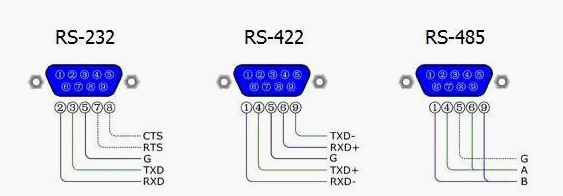
Mechanics of Modbus over RS485
Communication between the modbus master and modbus slave devices in an RS485 network involves a detailed protocol to ensure efficient data exchange. The heart of this communication lies in the data frame, which carries structured data from the master to the slave and vice versa.
A typical data frame in Modbus consists of several key components: the device address, function code, data, and the crc check. The device address identifies the intended recipient, while the function code specifies the action to be taken. Data encapsulates the necessary information for that action, and the CRC (Cyclic Redundancy Check) ensures data integrity by detecting errors during transmission.
The crc check is crucial for error detection. This two-byte value appended to the end of the data frame allows devices to verify the accuracy of received data, enhancing the reliability of the communication.
Hardware requirements for implementing Modbus RS485 include a serial port for each device and appropriate cabling to connect the network. The protocol stack on both master and slave devices manages this communication, ensuring that data frames are correctly formed, sent, and received.
Here's a detailed breakdown of the Modbus RS485 data frame structure:
|
Component |
Description |
|
Device Address |
Identifies the target modbus slave or modbus master. |
|
Function Code |
Specifies the operation (e.g., read, write) to be performed. |
|
Data |
Contains the operational parameters or results. |
|
CRC Check |
Ensures data integrity by detecting transmission errors. |
Implementing Modbus over RS485 efficiently requires a clear understanding of these components and their roles within the protocol stack. The synchronization between hardware and software ensures seamless communication, making Modbus over RS485 a robust solution for industrial applications.
Why Choose Modbus over RS485?
Emerging Trends and Future Outlook
|
Challenges |
Solutions |
|
Bus Arbitration |
Implement priority schemes and conflict resolution mechanisms. |
|
Device Addressing |
Assign unique addresses to each device; ensure correct configuration. |
|
Communication Distance |
Use repeaters, high-quality cabling, and effective network topology planning. |
|
Data Exchange |
Incorporate error-checking methods like parity bits and CRC. |
|
Troubleshooting |
Utilize termination resistors, shielded cables, and consistent device settings. |
Modbus RS485 in Context: Comparisons
Practical Applications and Examples
Modbus over RS485 has become an indispensable protocol in various industrial networks due to its robustness and efficiency. One illustrative example is in the field of data monitoring, where companies such as Siemens employ this protocol to ensure seamless communication between their sensors and central control systems in complex production environments. By facilitating rapid data exchange, it supports real-time applications that are critical for immediate response in automated systems.
Another practical application can be observed in the integration of actuators within industrial machinery. Manufacturers like General Electric utilize Modbus RS485 to synchronize the actions of these actuators with inputs from various sensors, thereby enhancing precision in processes such as assembly lines and packaging. This coordination ensures not only accuracy but also optimizes workflow efficiency and reduces downtime.
In the energy sector, Modbus RS485 is instrumental in the operation of control systems found in smart grid technology. Companies like Schneider Electric employ this protocol to manage and monitor electrical distribution processes, ensuring balanced loads and minimizing energy wastage. The ability to handle real-time applications enables timely adjustments, significantly enhancing the reliability and sustainability of power networks.
|
Application Area |
Example Company |
Benefits |
|
Data Monitoring |
Siemens |
Enhanced Communication, Real-Time Data Exchange |
|
Industrial Networks |
General Electric |
Improved Precision, Workflow Optimization |
|
Control Systems |
Schneider Electric |
Balanced Loads, Energy Efficiency |
These examples underscore the versatility and efficacy of Modbus over RS485 in various industrial networks. By automating the interaction between sensors, actuators, and control systems, this protocol drives efficiency and operational excellence in diverse industrial applications.
Future Outlook for Modbus over RS485
The future of Modbus over RS485 is shaped by several intriguing trends and innovations. As we advance in the realm of industrial communication, there is a notable focus on enhancing communication efficiency and network scalability. This is driven by the rising demand for more robust and versatile automation hardware that seamlessly integrates with existing systems, including solutions from leading industrial computer manufacturer and specialized devices like an industrial PC with NVIDIA GPU.
Significant strides are being made in the protocol evolution as well. Developers are continually working to refine the capabilities of Modbus to ensure it remains relevant amidst growing technological demands. This includes optimizing its performance and integrating newer technologies that heighten the overall system efficiency, supported by durable hardware such as a rugged laptop with GPU or devices from top rugged tablet manufacturers.
Moreover, the ongoing advancements in automation hardware are a testament to how Modbus over RS485 is evolving. Enhanced hardware capabilities, including industrial panel PC Windows 10 systems and industrial rackmount computer solutions, will inevitably lead to an increase in network scalability, allowing larger and more complex systems to operate seamlessly. This results in better communication efficiency, crucial for modern industrial applications, where reliability is ensured by trusted rugged laptop manufacturers.
Looking ahead, it is clear that Modbus over RS485 will continue to evolve, driven by the relentless pace of protocol evolution and advancements in industrial communication. The integration of cutting-edge technologies and the sustained focus on improving efficiency will position Modbus as a reliable choice for future industrial applications.


LET'S TALK ABOUT YOUR PROJECTS
- sinsmarttech@gmail.com
-
3F, Block A, Future Research & Innovation Park, Yuhang District, Hangzhou, Zhejiang, China
Our experts will solve them in no time.