
 Rackmount PC
 Embedded Computing
 Industrial Portable Computers
 Rugged Tablets
 Rugged Laptop
 Industrial Panel PC
 Rugged Handheld
 Advantech Industrial PC
What's the Difference Between 2.5G and Gigabit Network Connections on Industrial Computers?
Industrial computers are increasingly used in industrial automation, and the network connection is one of the key components for network connectivity. The type of network connection plays a crucial role in the performance and stability of industrial computers. This article explains the difference between 2.5G and Gigabit network connections.
Table of Contents
- 1. Introduction to the 2.5G Network Port
- 2. Introduction to the Gigabit Ethernet Port
- 3. Differences Between the Two
- 4. Related Product Recommendations
- 5. Conclusion
1. Introduction to the 2.5G Network Port
2.5G is a new generation of wireless communication technology with higher transmission speeds, lower latency, and greater network capacity. The introduction of the 2.5G network port enables faster and more reliable wireless connectivity to fanless industrial computers . It can support higher bandwidth requirements and enable real-time data transmission and remote monitoring.
At the same time, the 2.5G network port also brings more flexibility and mobility to industrial automation applications, thus facilitating the deployment and networking of devices.

2. Introduction to the Gigabit Ethernet Port
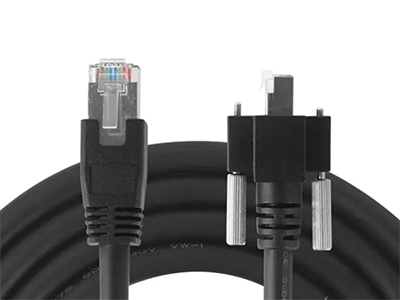
Ethernet is a common LAN transmission technology. Gigabit Ethernet is a high-speed version of Ethernet that typically uses an RJ-45 interface and can send and receive data simultaneously. It offers faster data transmission speeds and lower latency in fanless embedded PCs and is suitable for application scenarios with high network performance requirements.

3. Differences Between the Two
- Transmission Speed: The transmission speed of the 2.5G network port is faster and is typically several Gbps (gigabits per second), while the transmission speed of the Gigabit network port is 1 Gbps, which is relatively slow.
- Technical Standards: The 2.5G network port uses a wireless module to establish a wireless connection, while the Gigabit network port is based on the Ethernet standard and uses a twisted-pair cable for wired data transmission.
- Applications: 2.5G network ports are primarily used in mobile communications and wireless networking applications. They are suitable for applications requiring high speed and low latency, such as high-density data transmission, real-time control, and remote monitoring. Gigabit network ports are suitable for wired LANs and enable fast wired data communication.
4. Related Product Recommendations
Industrial Computers with 2.5G Network Port
Model: SIN-3094-H610E
This is a 13th generation SINSMART Core embedded industrial computer with powerful performance and numerous interfaces. It features four Intel 2.5 Gbps network ports and more stable transmission efficiency. Data can be transferred easily in seconds.

Industrial computer with Gigabit Ethernet port
Model: SIN-24605-ZQ170MA
This is a 2U rackmount PC with a 7th generation Intel Core processor and Intel Q170 chipset, supporting up to 64 GB of memory and suitable for various industrial applications. It features two Intel Gigabit Ethernet ports, six serial ports, and 14 USB ports, offering ample connectivity and high flexibility.

5. Conclusion
5G network ports and Gigabit network ports play different roles in industrial computers, each with its own characteristics and advantages. As one of the leading manufacturers of embedded PCs , SINSMART Technology offers a wealth of choices to ensure that industrial computer network connectivity meets system requirements and provides stable and reliable performance.


LET'S TALK ABOUT YOUR PROJECTS
- sinsmarttech@gmail.com
-
3F, Block A, Future Research & Innovation Park, Yuhang District, Hangzhou, Zhejiang, China
Our experts will solve them in no time.